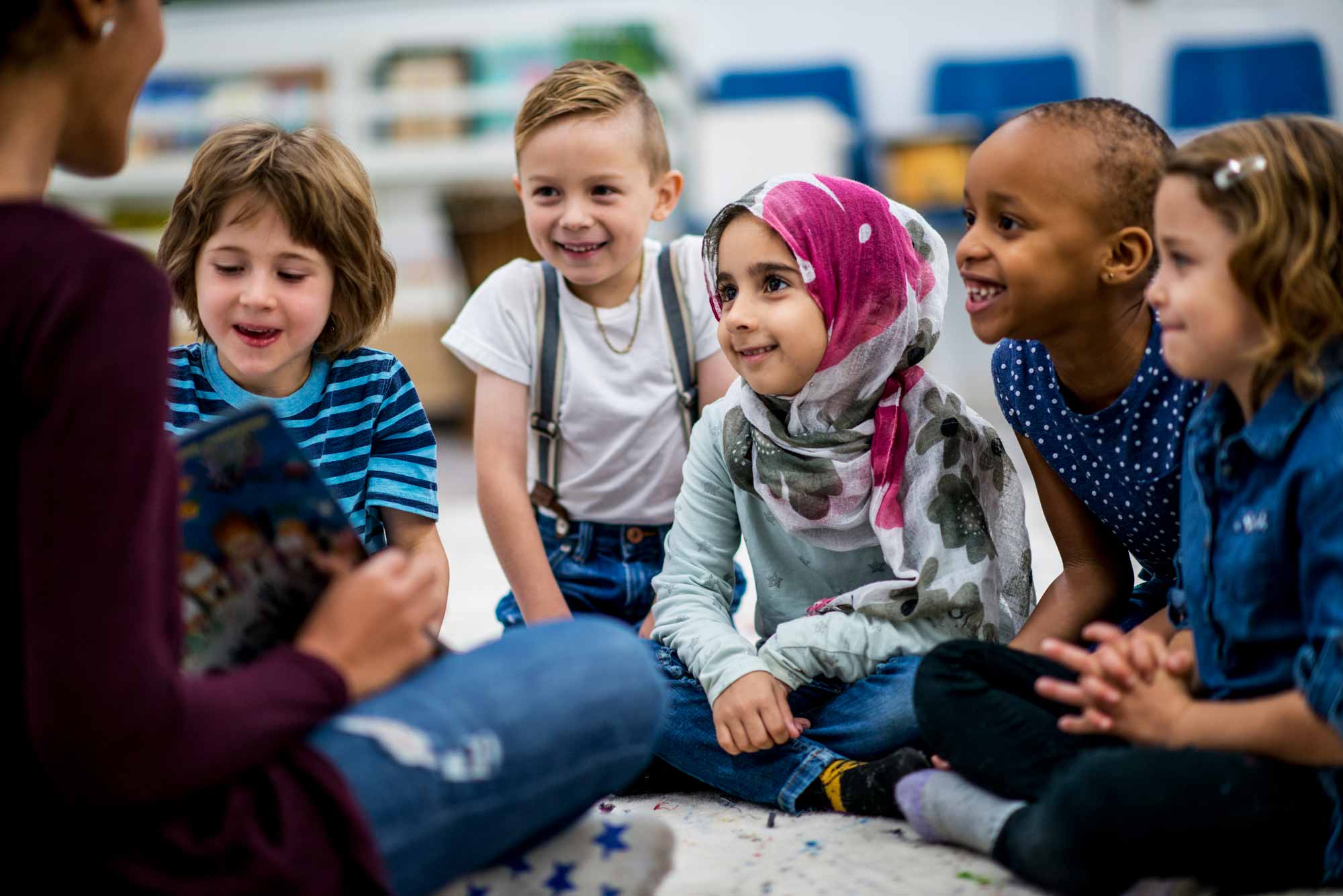
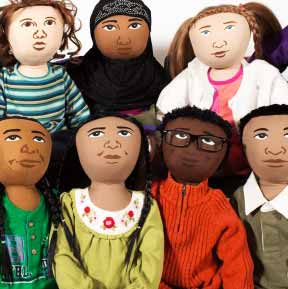
Given their strong tendency to internalize, young children are extremely vulnerable to bias and stereotypes. And that vulnerability can turn into bias-based attitudes, beliefs, and behaviors that last a lifetime. With the assistance of our early childhood curriculum, teachers can address potential issues before they become lasting problems.
The Persona Doll curriculum:
Supports the growth of social-emotional skills in young children
Provides positive representations, reinforcing healthy identity development and respect across differences
Help facilitate age-appropriate conversations around race, gender, ability and neurodiversity, class, family structures, and more.
Read more about Persona Dolls here, or purchase them on our website store.
Elementary
The AmazeWorks Elementary Curriculum empowers teachers and children to co-create classrooms of equity and belonging where children feel valued, respected, and connected by engaging in intentional, regular discussions about identity, differences, and bias.
Grounded in anti-bias education theory, this research-based curriculum promotes healthy identity development and the exploration of differences.
The PreK – 5 curriculum:
Fosters social-emotional learning through the lens of anti-bias education.
Is literature-based and includes 20 high-quality trade books per grade level, written from authentic voice whenever possible.
Includes two printed curriculum guides with lesson plans for each book with discussion questions, journal prompts, and follow-up activities.
Covers a wide range of identities, family structures, and lived experiences, including race/ethnicity, immigration, religion, class, disability and neurodiversity, gay/lesbian family members, gender diversity, family structures (divorce/blended, adoption), incarceration, death, and deployment.
Includes a Scope and Sequence and literacy alignment.
Is aligned with SEL Core Competencies.
Can be used in small and large group settings.
Middle School
The AmazeWorks Middle School Curriculum offers a supplemental video and discussion-based curriculum, designed to help educators navigate important conversations with students about identity, difference, and bias.
The Middle School Curriculum:
Engages middle school students to consider:
Who do I want to be in this world?
How do I want to be in this world?
How do I want others to see me?
Fosters students’ social-emotional skills through the lens of anti-bias education.
Includes lesson plans for each video with discussion questions, journal prompts, and optional follow-up activities.
Embeds and combines anti-bias education and culturally responsive teaching.
Organized into modules on a variety of identities and themes, including racial/ethnic identity and racial bias, LGBTQ+ identities, ability and neurodiversity, immigration/migration, and religion/faith
Can be used in an advisory, homeroom, or classroom setting.
Accessed through a subscription-based online portal.